Caveman good
The caveman skill is one of those ideas that sounds stupid for about ten seconds, then starts looking hilariously correct.
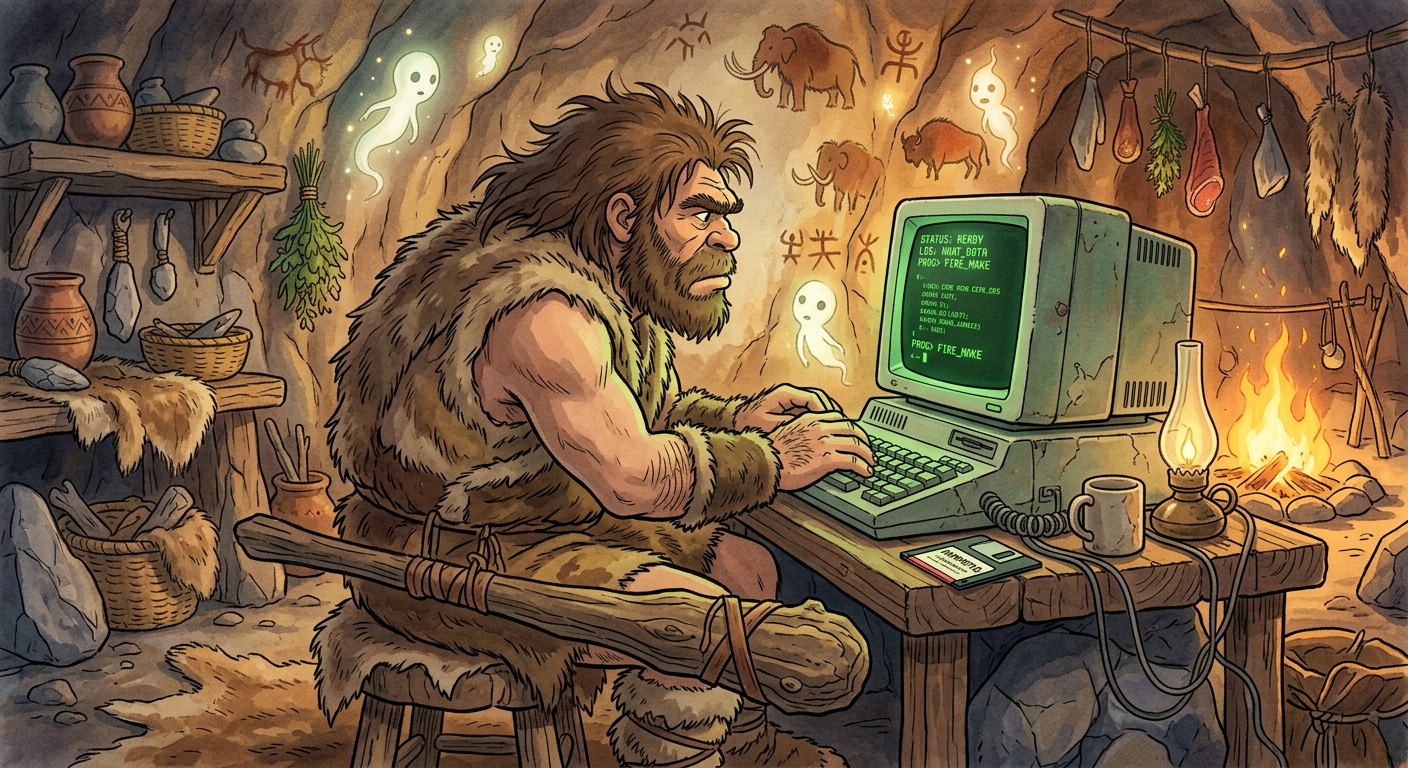
It tells the model to speak in compressed caveman fragments. Fewer filler words. Fewer soft landings. Fewer "actually," "basically," and "it is important to note" crimes against humanity.
The weird part is how well it works.
It saves tokens. That means it saves money. It also speeds the model up, because the model has less garbage to produce and less garbage for you to read.
That should not feel surprising, but it kind of does, because most of us are used to AI sounding like a nervous consultant trapped in a customer success webinar.
Caveman cuts through that.
In the process it reminds us of something slightly rude about human language: normal speech is inefficient on purpose.
We did not evolve language for maximum compression. We evolved it for turn-taking. For breathing. For thinking while talking. For buying time. For softening things so we do not sound insane or hostile. That is why human conversation is full of throat clearing and little verbal cushions.
Models do not need any of that.
They do not need to breathe. They do not need time to think mid-sentence. They do not need to "um" and "ah" and "actually" us to death while pretending to reason in public. They can just say the thing.
That is why this style works better than it should.
Example.
Normal Claude:
"Sure! I'd be happy to help you with that. The issue you're experiencing is most likely caused by your authentication middleware not properly validating the token expiry. Let me take a look and suggest a fix."
Caveman Claude:
"Bug in auth middleware. Token expiry check use < not <=. Fix:"
Same meaning. Fewer tokens. Faster to generate. Faster to read. Harder to misunderstand.
This also makes me wonder how much wordiness is accidental and how much is business model.
Model providers make money on tokens. That does not automatically mean they are making models verbose on purpose, but it does mean they are not exactly suffering when a model spends fifty tokens saying what could have been said in twelve.
Maybe the verbosity is just a side effect of training on human text, which is full of padding and rhetorical fluff. Maybe not. Either way, nobody in that stack is strongly incentivized to make the answer brutally concise by default.
I like caveman partly because it saves money and time, but also because its hilarious that our highest tech achievement in the history of humanity is a superfast Caveman :)
A recent development is Caveman micro. As it turns out, the full caveman skill was not really necessary. You can get most of the effect by dropping this straight into your prompt:
Respond like smart caveman. Cut all filler, keep technical substance.
- Drop articles (a, an, the), filler (just, really, basically, actually).
- Drop pleasantries (sure, certainly, happy to).
- No hedging. Fragments fine. Short synonyms.
- Technical terms stay exact. Code blocks unchanged.
- Pattern: [thing] [action] [reason]. [next step].