AI benefits employees before companies
A lot of companies are quietly assuming that if employees use AI, the company automatically gets the benefit.
I do not think that is true.
If the input to a job is a person and the output is also a person, the first-order gains often go to the employee.
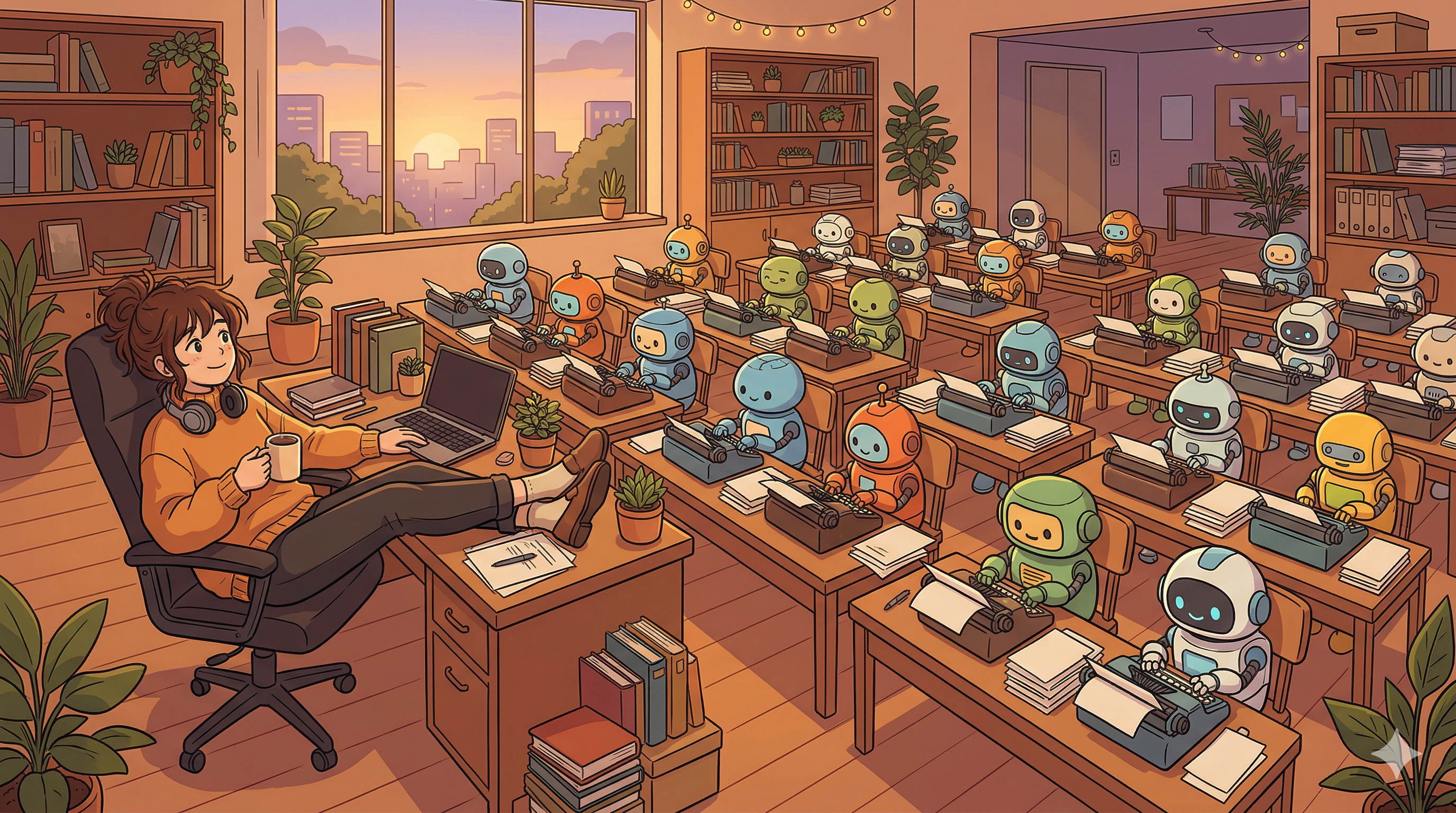
They use AI to write faster, summarize faster, think faster, prepare faster, and get through the annoying parts of the day with less friction. They finish the same work in less time, but that does not mean the employer sees more output.
Sometimes it just means the employee gets their afternoon back.
The company cannot capture what it cannot see
This is the part people miss.
If a job is mostly meetings, messages, documents, decisions, and human handoffs, AI can make one person much more efficient without creating any clean metric that shows up on a dashboard.
The employee can use AI to compress the work. They can reply faster, produce drafts faster, analyze faster, and recover from context switching faster. But if the work is still routed through the same human bottlenecks, the company may not get much more throughput from it.
The extra efficiency is real. It just gets absorbed privately.
Unstructured work leaks the gains
In a lot of companies, work is still shaped like this:
- a person asks another person for something
- that person disappears into a fog of meetings and tabs
- a result comes back later
That is not a system. That is a social process with some software around it.
In that kind of environment, AI mostly helps the person in the middle. It does not automatically help the company around them.
The employee becomes more capable, but the gain does not necessarily become more measurable, more scalable, or more legible.
The gains were real, but the workflow was too mushy to capture them.
Structured work is different
If a project is structured for AI, the picture changes.
Now you have clearer inputs, clearer outputs, cleaner handoffs, and work that can be inspected outside the head of the employee doing it. The system starts to expose where AI is reducing time, increasing throughput, or improving quality.
Once that happens, the benefits stop being purely personal.
They become organizational.
This is where AI productivity becomes easier to see:
- tasks have explicit artifacts
- work moves through queues instead of vague hallway conversations
- outputs can be reviewed or measured
- prompts, playbooks, and workflows can be shared
- the AI is attached to the process, not just the individual
At that point, management can actually see the difference between a person who used AI and a system that was redesigned around AI.
Those are not the same thing.